Why Electric Scooters Are Becoming the Go-To for Food Delivery Riders
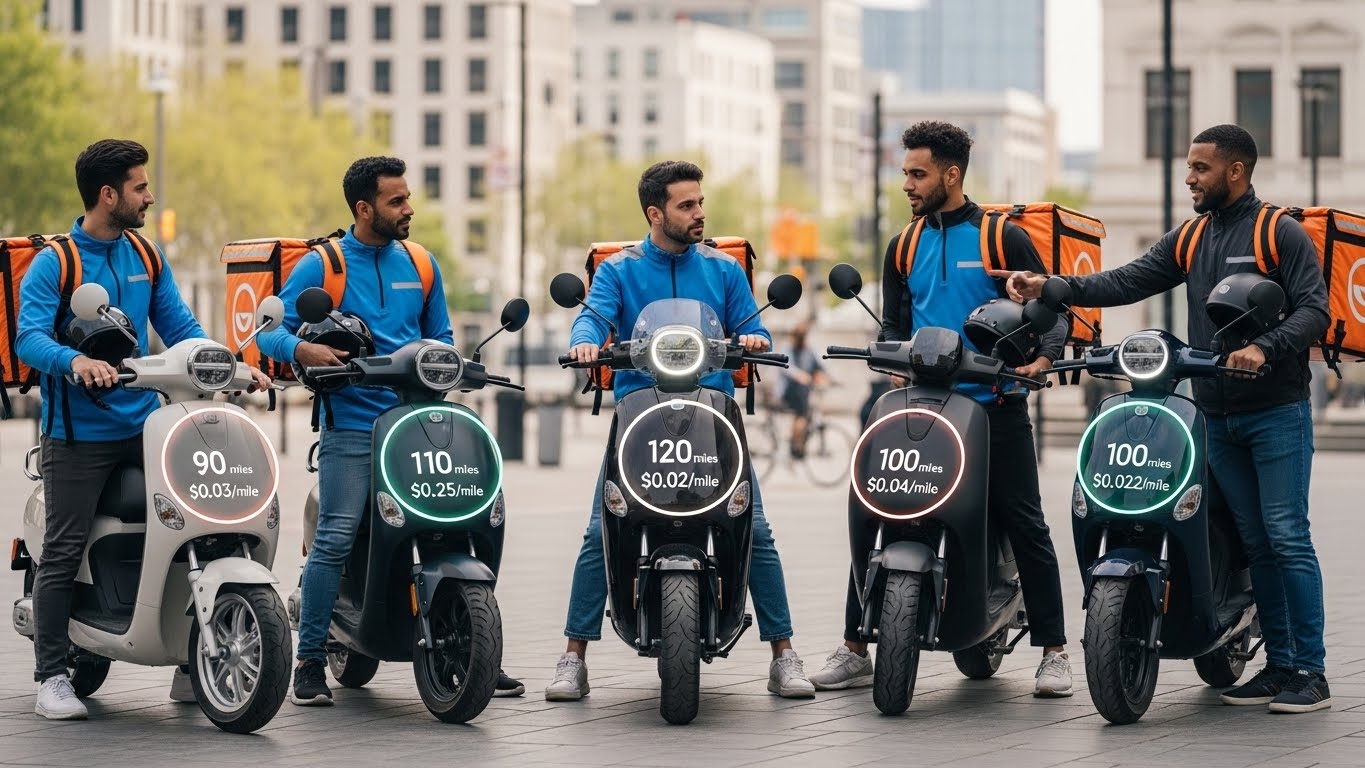
Electric scooters (EV scooters) are increasingly popular among delivery riders in India — and for good reason. Compared to petrol scooters, EVs offer much lower running costs, simpler maintenance, and reduced emissions. (GrowthJockey)
Some of the key advantages for delivery riders are:
- Low operating cost per km: With electricity often costing a small fraction of petrol for equivalent distance, delivery riders cover more km/day for less money. (GrowthJockey)
- Reliable, predictable running costs: No fuel price fluctuations, simpler maintenance compared to ICE (internal combustion engine) scooters — this means better budgeting for riders and fleet operators. (risewisecapital.com)
- Environment-friendly and quieter rides — beneficial in crowded urban zones where deliveries are concentrated. (Zypp Electric)
Given growing interest from food-delivery services, gig riders and fleet operators, 2025 is seeing more EV scooters tailored or chosen for delivery. (strikeco.co.in)
But not all electric scooters are ideal for delivery work. For delivery riders, key priorities are range per charge, cost per km, reliability, charging convenience, and load-carrying ability. With those in mind, below are some of the top scooters that suit food-delivery or courier riders in India right now.
What Makes a Good EV Scooter for Delivery Riders
Before discussing models, it helps to understand what delivery-specific riders should look for in an EV scooter:
- High real-world range per full charge — enough to cover a day’s deliveries without recharging mid-shift.
- Low running cost per km — since profit depends on how many orders done per rupee spent.
- Durable battery & motor plus good after-sales/service network — to avoid downtime and ensure reliability.
- Adequate storage / opportunity to mount delivery boxes — many deliveries require carrying food parcels or groceries.
- Comfortable for constant starts/stops and city-traffic riding — good handling, suspension, and reliability in frequent short rides.
With these criteria, not every EV scooter on the market becomes a fit — but some stand out significantly.
Top Electric Scooters (2025) Recommended for Food-Delivery Riders
Here are some of the best electric scooters in India in 2025 that tend to match the delivery-rider use case (good range, decent cost efficiency, reliability):
TVS iQube Electric
- Known for balanced specs: a practical mix of decent range, reliable build and manageable running cost. (Wikipedia)
- Because of its brand support (maintenance/service network), it becomes a solid choice for riders depending on daily reliability rather than occasional joy-rides.
Bajaj Chetak
- Among the electric scooters popular in India and available at relatively moderate price-point, good balance of comfort and efficiency. (ZigWheels.com)
- For riders who want a familiar stable ride (as with traditional scooters) but prefer electric running-costs — Chetak is a viable option.
Ola S1 X / Ola S1 Pro
- Ola’s lineup is often highlighted among long-range electric scooters — suitable if your delivery area is wide and you want fewer charges per day. (ZigWheels.com)
- That said — for intensive delivery use, it’s wise to check real-world range after load and city-traffic before deciding.
Budget / Entry-level EV scooters suitable for light-duty delivery
For riders or delivery partners who may be cost-conscious or starting out: some lower-cost EV scooters (under ₹1-1.2 lakh) offer adequate range for short city-zone deliveries. Many such models appear in aggregated “best under price” lists in 2025. (komaki)
For example: smaller-range scooters may still work if your daily route is limited to ~30-50 km and deliveries are concentrated in a compact area.
Running Cost & Mileage — What to Expect with EV Delivery Scooters
One of the biggest attractions of EV scooters for delivery riders is cost efficiency. According to industry reports:
- The operating cost per km for an EV 2-wheeler is often 1/6th to 1/8th of what a petrol two-wheeler would cost — significant savings over time. (GrowthJockey)
- Many EV scooters offer a full-charge range that can cover 100-150 km or more, depending on riding style, load and charging habits — enough for a full day of city-delivery work without mid-shift charging. (ZigWheels.com)
- Lower maintenance costs — fewer moving parts compared to petrol engines, simpler servicing, and less frequent need for “fuel-system related maintenance.” (Zypp Electric)
Because riders often work long hours and rely on covering many kilometers daily, these savings accumulate — translating to improved profitability per delivery compared to petrol scooters.
In short: EV scooters shift owning cost from fuel + maintenance + frequent servicing to electricity + occasional servicing, usually resulting in a lower, more predictable per-km cost.
Challenges & What Delivery Riders Should Watch Out For
No solution is perfect. Before switching or investing in an EV scooter for delivery, here are some real-world challenges often cited:
- Charging infrastructure & convenience: While EV scooters are economical, delivery riders need reliable charging options — whether home charging, depot-level chargers or workplace charging. In many Indian cities, public charging infrastructure is still evolving. (Zeway)
- Range limitations under load or heavy use: With frequent stops, start/stop traffic, carrying parcels or heavier loads — real-world range may drop compared to ideal manufacturer claims. (zevoindia.in)
- Scooter suitability for load & delivery boxes: Not all scooters are designed with carrying large or heavy cargo in mind. For bulky food parcels or grocery deliveries, scooters with stable rear racks or customised carriers are better.
- Long-term battery life & service network: EV battery and motor upkeep matters. Frequent deep discharge, heavy load cycles, or poor maintenance may reduce battery lifespan or range over time. Thus, choosing a brand with good after-sales support is vital.
- Initial cost & financing concerns: EV scooters tend to have higher upfront cost than budget petrol scooters — though subsidies, lower operating cost, and long-term savings often offset this. (BikeWale)
Tips for Delivery Riders Choosing an EV Scooter in 2025
If you are a food-delivery rider (or planning to become one) and thinking of switching to an EV, here’s a practical checklist to ensure your investment pays off:
- Estimate your daily route distance — choose a scooter whose real-world range comfortably exceeds your daily km (including return) plus buffer for unexpected deliveries/ detours.
- Prioritize total cost per km (electricity + maintenance) — calculate expected monthly running cost vs number of orders and typical income to ensure profitability.
- Check local service / charging infrastructure — availability of reliable servicing centers or charging points near where you stay or deliver is crucial.
- Ensure load-carrying / delivery-box mountability — if you regularly deliver multiple parcels or food boxes, confirm if the scooter supports racks or add-ons easily.
- Ride style matters — frequent stops, heavy start/stop traffic, steep roads or full load will reduce range. Riding smoothly helps retain range and battery health.
- Battery care & charging habits — avoid over-discharging and try to recharge after certain usage rather than letting battery go very low many times. This prolongs battery life and ensures consistent performance.
- Plan for downtime / backup if needed — if recharging takes longer (especially fast chargers are not available), having access to backup charging (home, depot, or swap) matters.
Who Should Go For Petrol, and Who Should Switch to EV (or Stay Hybrid Approach)
EV scooters for delivery are ideal for:
- Riders with short-to-medium daily delivery radius (city areas, local zones) with many deliveries per day.
- Those who prioritize low running cost, predictable maintenance, and minimal fuel-price risk.
- Riders who don’t need to travel very long distances outside city (intercity) often.
But for:
- Deliveries involving long range, intercity transport or very heavy loads,
- Places with poor charging infrastructure or unreliable electricity supply,
- Riders needing maximum flexibility or high-speed long-distance rides — petrol or hybrid options might still work better.
That said — for typical urban food-delivery or courier work inside cities/towns — EV scooters are increasingly becoming practical and efficient choice in 2025.
Conclusion: EV Scooters — A Smart Choice for Most Delivery Riders in 2025
As fuel prices remain volatile and the gig-delivery sector keeps growing, EV scooters have emerged as an attractive, cost-effective alternative for food-delivery riders in India. With significantly lower running costs, manageable maintenance, and improving EV infrastructure — the economics increasingly favour EV adoption for daily delivery work.
That said — the benefits depend heavily on choosing the right scooter model (good range + service support), smart usage, and realistic route/ load planning. Not all EVs are ideal — but the right ones can offer better profits per km, lower risk, and sustainable long-term savings compared to petrol scooters.
If you like — I can also prepare a comparison table (Excel/Markdown) for 5–10 of the best EV scooters for delivery riders (with range, running cost, pros/cons). It helps if you want to embed in a blog or share with other riders.