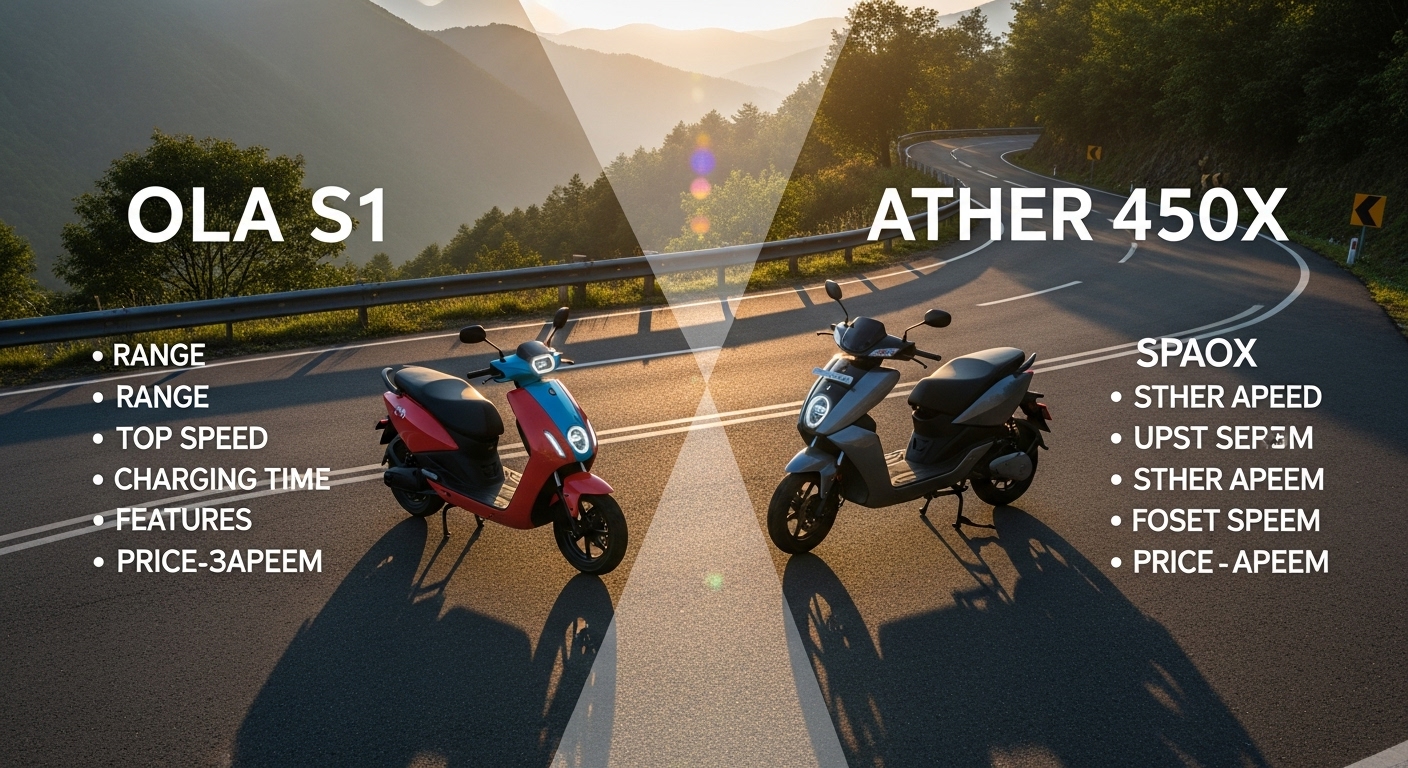
A buyer’s guide comparing range, charging, performance, features, cost of ownership, and which scooter is the smarter pick in 2025. Written in an AdSense-friendly style (long paragraphs, clear headings) so you can publish it directly.
Quick verdict (one line)
If you want blistering performance and aggressive range claims, Ola S1 Pro pushes the envelope; if you want proven fast-charging infrastructure, refined software, and balanced city performance, Ather 450X remains the safe, well-rounded choice. (Ola Electric)
Why this comparison matters in 2025
Electric scooters have matured fast. Early buyers wrestled with limited range and slow charging, but today’s flagships target both range and fast top-up times. Choosing between an Ola and an Ather isn’t just brand preference anymore — it’s about charging convenience, warranty and software updates, real-world range, and the overall running cost. This comparison helps you weigh those tradeoffs so you can pick the right scooter for your daily life, not just the slick spec sheet.
Head-to-head: headline specs
Below are the headline specs you’ll see in most reviews and brochures — motor power, claimed range, and charging times from each manufacturer’s official info.
- Ola S1 Pro (Gen-3 and variants) — very large IDC range claims (up to 320 km for top variants in current lineup) and high peak motor power (up to ~13 kW on sport variants). Home charge 0–80% times are quoted in the 4–7 hour range depending on battery variant; Ola also advertises very fast top-ups like “75 km in 18 minutes” using rapid charging. (Ola Electric)
- Ather 450X (Gen-3 / 3.1) — balanced package with usable battery packs (~2.6–3.24 kWh usable capacity depending on variant), official home 0–80% times ~3.5–4.5 hours and fast-charge rates advertised around ~1 km of range per minute at Ather Grid stations (Ather publishes a fast-charge metric and public Grid network details). (assets.atherenergy.com)
These numbers set the stage for the rest of this article: real-world range and charging convenience are the two most important buyer considerations after price.
1) Real-world range: claimed vs practical
Manufacturer claims are measured under controlled test cycles (IDC, WMTC or internal tests). Real life is different: temperature, riding style, speed, traffic and payload change range dramatically.
- Ola S1 Pro publishes very large IDC numbers for its higher variants (100s of km for top trims). Those headline figures are impressive and useful for marketing, but expect real-world numbers to be lower if you ride aggressively or at highway speeds. Ola’s higher-range trims come with bigger battery packs which naturally increase weight — influencing handling and energy consumption. (Ola Electric)
- Ather 450X tends to show more conservative, realistic range figures that many users report matching closer to day-to-day experience. Ather’s emphasis on efficient motor mapping, regen tuning and a focused city-commuting setup helps extract practical range in traffic and mixed riding conditions. Ather publishes usable battery figures and clear charge time metrics which make customer expectations easier to set. (assets.atherenergy.com)
Takeaway: Ola can offer higher theoretical range on top trims, but Ather typically delivers a closer match between claimed and real-world range for most urban riders.
2) Charging speed & infrastructure — the real convenience factor
Charging speed is as important as range. Two scooters with identical range behave very differently if one can be rapidly topped up in minutes while the other needs hours.
- Ola: The brand advertises rapid charge metrics and short top-up claims (examples include quick top-ups like 75 km in 18 minutes). For owners who can access Ola’s charging options or compatible rapid chargers, this can be a huge convenience—especially for occasional longer trips. However, charging performance depends on which battery variant you have and what public/home charger you use. (drivespark.com)
- Ather: Ather has invested heavily in a public fast-charging network called the Ather Grid. Ather quotes useful real-world charging metrics such as ~1 km of range per minute using Grid chargers and provides transparent home-charge times (0–80% in roughly 3.5–4.5 hours depending on variant). That predictable ecosystem helps owners who rely on public charging or want consistent, fast top-ups during the day. (Ather Energy)
Takeaway: If public fast-charge network reliability is top priority, Ather’s Grid gives a consistent edge. Ola’s fast-charge claims are compelling but depend on access to compatible infrastructure and variant.
3) Performance & ride feel
Both scooters emphasize instant torque, but their tuning philosophies differ.
- Ola S1 Pro: tuned for aggressive acceleration, higher top speed on premium trims, and sportier riding modes. If you want punchy overtakes and performance-oriented ride modes, Ola aims to deliver. Peak motor figures in marketing materials are high on performance trims, translating to strong acceleration times in many tests. (Ola Electric)
- Ather 450X: performance is more balanced—quick, but tuned for urban agility and predictable handling. Ather’s motor and torque mapping favors efficient throttle response, making city traffic and stop-start riding effortless. Many owners praise the 450X for its composed ride and refined electronics. (assets.atherenergy.com)
Takeaway: Choose Ola if you prioritize outright acceleration and sporty feeling; choose Ather for composed, confidence-inspiring city ride quality.
4) Software, UX & connected features
Modern EVs are software platforms as much as hardware.
- Ola: heavy on flashy software features, OTA upgrades, large instrument displays and aggressive marketing of smart features. The Ola ecosystem includes smartphone app integration, navigation, ride modes, and frequent feature pushes. However, early days saw mixed user reports on stability—Ola has been iterating quickly. (Ola Electric)
- Ather: known for a clean, usable UI and reliable OTA updates. Ather’s user experience focuses on practical features—navigation optimized for scooters, charging station integration, and well-designed apps. Ather’s consistency is one reason many buyers trust its day-to-day UX. (Ather Energy)
Takeaway: Ola pushes more features and raw hardware, Ather emphasizes polished, stable UX and a mature app/charging integration.
5) After-sales, warranty & service network
EV ownership comfort depends on service reach and battery warranty terms.
- Ola: expanded service footprint rapidly, and newer variants include attractive ownership packages. Because Ola grew fast, some early customers reported initial service teething issues—but the company has been scaling service centers and pickup/drop offerings. Check local service ratings before you buy. (Ola Electric)
- Ather: has a well-established dealer/experience-centre model and a widely publicized Grid network. Ather’s customer service tends to be rated highly for consistent support. Ather also provides clear battery and vehicle warranties. (assets.atherenergy.com)
Takeaway: Both brands now offer reasonable coverage in urban centres; Ather’s conservative rollout focuses on service quality while Ola prioritizes rapid scale—local dealer experience will determine the winner for your city.
6) Cost of ownership (running & maintenance)
EVs win big on running costs versus ICE bikes, but differences exist between EV brands.
- Charging cost per km for both is low (single-digit rupees per full charge depending on tariffs). Ather publishes typical charging cost numbers (~₹20–₹35 for a full charge depending on electricity rates), and Ola promotes large lifetime savings versus petrol two-wheelers. (Ather Energy)
- Maintenance differences are marginal between modern EV players—both have fewer moving parts than ICE bikes. However, battery replacement costs and long-term BMS quality vary; check official battery warranty duration (Ather publishes charging/cost details transparently). (assets.atherenergy.com)
Takeaway: Expect very low running costs on both scooters. Compare local service prices and battery warranty lengths to estimate 5-year ownership cost.
7) Practical ownership scenarios — which one should you buy?
Let’s match scooters to real user needs.
- You live in a metro with access to charging stations and want predictable, fast top-ups during the day (work, errands): Ather 450X — Ather Grid and consistent charge metrics make it easier to top up quickly and predictably. (Ather Energy)
- You want the highest possible range and sportier variants for occasional highway runs: Ola S1 Pro (top trims) — larger battery options and higher peak motor specs make it attractive if you need long IDC range and sporty performance. Verify real-world range for your riding patterns. (Ola Electric)
- You value a polished, stable software experience and clean UI: Ather — known for dependable UX and practical features. (Ather Energy)
- You want aggressive features, flashy hardware, and are comfortable with rapid product iterations: Ola — often leads with new hardware and bold claims, and provides significant value if you can access its charging or service network. (Ola Electric)
8) Common buyer questions (short answers)
- Which charges faster in real life? Ather’s Grid gives predictable fast-charge ~1 km/min at public chargers; Ola advertises very fast top-ups (e.g., 75 km in 18 minutes) but actual speed depends on charger access and variant. (Ather Energy)
- Which has better software updates? Both push OTA updates; Ather is generally seen as more conservative and stable, Ola pushes features aggressively. (Ather Energy)
- Which has better resale? Market sentiment fluctuates; historically Ather’s consistency has helped resale in some cities, but Ola’s volumes and price positioning are changing the market. Local demand will be decisive. (Ola Electric)
Final verdict & buying checklist
Both scooters are market leaders and excellent choices in 2025. Your final pick should depend on:
- Where you ride — city only vs mixed highway use.
- Access to public fast chargers — Ather Grid availability vs Ola charger access.
- Priority on range vs UX polish — Ola for top range/performance; Ather for predictable UX and charging.
- Local service & dealer reviews — visit experience centres, book test rides, ask about local service response time.
- Total cost of ownership — factor in electricity rates, warranty, planned battery replacement and insurance.
If you want a short checklist to take to the showroom, here it is: test ride both, check local charging/network coverage, ask for a full spec sheet for your variant, compare on-road price and warranty, and inspect software features in person.
Appendix — Sources (selected)
Key manufacturer and review sources used for specs, charging claims and fast-charge metrics: Ola official site, Ather official spec sheets & blog, independent reviews highlighting fast-charge claims. (Ola Electric)