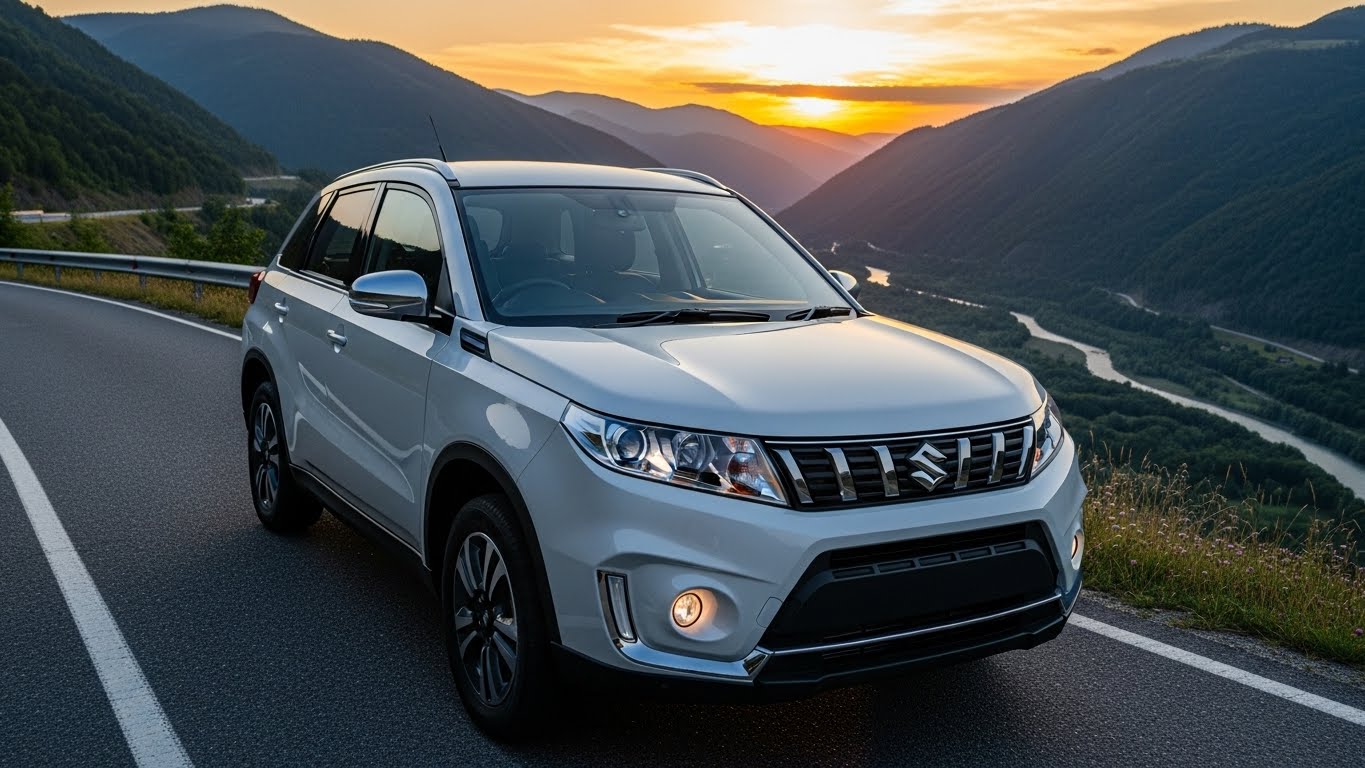
First Look at Maruti Suzuki e Vitara: India’s First Maruti Electric – Specs, Pros & Cons
Maruti Suzuki is finally stepping into the pure-electric game, and the e Vitara is the model carrying that huge responsibility. It’s a born-electric midsize SUV based on the eVX concept and is set to be Maruti Suzuki’s first mass-produced electric vehicle for India and global markets. (Autocar India)
Production has already begun at Maruti Suzuki’s Hansalpur plant in Gujarat, which will also act as an export hub for over 100 countries. (Reuters) The India launch is scheduled for early December 2025, with prices expected in the ₹17–22.5 lakh (ex-showroom) range depending on variant and battery pack. (CarDekho)
If you’re planning content for Google AdSense approval or just researching your next EV, this detailed first look at the Maruti Suzuki e Vitara covers:
- Key highlights at a glance
- Detailed specs (battery, range, dimensions, features)
- Pros and cons for real-world Indian buyers
- Where the e Vitara fits in the current EV market
Key Highlights of Maruti Suzuki e Vitara
Quick facts:
- Body type: Midsize electric SUV (around 4.27 m long) (Wikipedia)
- Platform: New Heartect-e skateboard EV platform
- Battery options (India-spec, expected): (CarDekho)
- ~49 kWh battery, FWD
- ~61 kWh battery, FWD (AWD likely later)
- Claimed range: Up to 500+ km on the larger pack (ARAI figure expected) (CarWale)
- Expected power output:
- 49 kWh: ~142 bhp
- 61 kWh: ~170+ bhp
- AWD top variant (global): up to ~135 kW (≈181 bhp) (Wikipedia)
- Expected price range: ₹17–22.5 lakh (ex-showroom) (CarDekho)
- Production: Hansalpur, Gujarat – India as global EV hub for Suzuki (Reuters)
- Rivals: Tata Curvv EV, Tata Nexon EV (top trims), MG ZS EV, Hyundai Creta EV, Mahindra BE 05 (Autocar India)
Design & Dimensions – Butch, Futuristic SUV Look
The e Vitara is not just a Grand Vitara with a battery. It’s a ground-up EV design, and that shows in the styling:
- Sharp LED DRLs and headlamps integrated into a closed-off grille
- Strong SUV stance with squared-out wheel arches and thick cladding
- Aerodynamic front and rear bumpers designed to reduce drag and improve range (NEXA)
- Floating-style roof with a contrast black option on many colours (CarDekho)
Approximate dimensions (India / Europe spec): (Wikipedia)
- Length: ~4,275 mm
- Width: ~1,800 mm
- Height: ~1,635 mm
- Wheelbase: ~2,700 mm
- Ground clearance: ~180 mm (suitable for Indian roads and light rough usage)
These numbers put the e Vitara right in the heart of the compact–midsize SUV space, very close to the Hyundai Creta, Kia Seltos and Tata Curvv EV in footprint.
Battery, Motor & Range
Under the floor sits a flat, high-capacity battery pack based on LFP (Lithium Iron Phosphate) blade cell tech, co-developed with BYD for global markets. (Wikipedia)
Battery Options (Expected India Specification)
- Standard pack (around 49 kWh):
- Power output: ~142 bhp (approx. 106 kW)
- Range: Likely around 350–380 km in mixed real-world use (estimate based on global data)
- Long-range pack (around 61 kWh): (CarWale)
- Power output: ~170+ bhp (up to 128 kW FWD, 135 kW with AWD globally)
- Certified range: 500+ km (ARAI / WLTP-style claim)
- This is expected to be the first variant on sale in India. (Autocar India)
Drivetrain
- FWD (front-wheel drive) at launch in India
- AWD (AllGrip-e) variant with dual motors expected later, mainly for top trims (Wikipedia)
Performance & Everyday Use
While exact 0–100 km/h figures for India are not officially published yet, global estimates suggest:
- Smooth, linear acceleration thanks to the instant torque of the electric motor
- Enough performance to feel quicker than a typical 1.5–1.6L petrol SUV in the same segment
- High-speed cruising should be comfortable due to the long wheelbase and EV-specific suspension tuning
Interior, Features & Tech
Maruti Suzuki is clearly trying to move the e Vitara up-market in terms of feel and equipment.
Cabin & Infotainment
Expected interior highlights (based on unveiled models and leaks): (CarDekho)
- 10.25-inch touchscreen infotainment system with connected-car features
- 10.1-inch full digital instrument cluster
- Premium dashboard design with layered surfaces and soft-touch materials on higher trims
- Practical physical controls for climate control (not fully touch-only, which many buyers hate)
- Likely support for Android Auto & Apple CarPlay (wireless on top variants)
Comfort & Convenience
You can expect:
- Electric sunroof or panoramic sunroof on higher variants (CarWale)
- 10-way power adjustable driver’s seat (as teased on some variants) (CarDekho)
- Rear AC vents and a flat floor for better rear passenger comfort
- Multiple drive modes and regen levels for efficiency and performance adjustment
- Keyless entry, push-button start and possibly a powered tailgate on top trims (speculation based on rivals)
Safety & ADAS
The e Vitara is also expected to be one of the safest Maruti models to date.
Core Safety Equipment
- Up to 7 airbags (6 standard + 1 knee airbag on higher trims) (CarDekho)
- ESC (Electronic Stability Control)
- ABS with EBD
- Front and rear parking sensors
- 360-degree camera
- Electronic parking brake with auto-hold
- ISOFIX child-seat mounts
ADAS (Advanced Driver Assistance Systems)
Maruti has confirmed Level 2 ADAS tech for higher variants: (CarWale)
- Adaptive cruise control
- Lane keep assist / lane departure warning
- Autonomous emergency braking (AEB)
- Possibly blind-spot monitoring and rear cross-traffic alert on top trims
Crash-test ratings from Global NCAP/BNVSAP are not yet available. It’s reasonable to expect Maruti to target a competitive rating, but you should wait for official test scores before making final purchase decisions.
Charging Options & Running Costs
Official detailed charging times for Indian-spec models are still to be fully disclosed, but based on global EV norms and what has been reported so far: (NEXA)
Likely Charging Options
- DC Fast Charging:
- 10–80% in roughly 30–40 minutes on a suitable fast charger (estimate)
- AC Home / Wall Box Charging:
- 7–11 kW AC charger at home could top up the battery overnight (6–9 hours depending on capacity)
Running Cost Advantages
- Per-km running cost is likely to be significantly lower than petrol and even CNG, especially if you charge mostly at home during off-peak hours.
- Minimal engine oil / filter service compared to ICE cars – mostly tyres, brake pads, coolant and basic check-ups.
For city users doing 40–60 km/day, charging 2–3 times a week at home will usually be enough, especially with the long-range pack.
Pros of Maruti Suzuki e Vitara
Here are the big advantages that make the e Vitara a very interesting option:
- Maruti’s first electric SUV
- Strong brand trust and massive sales & service network across India. (Reuters)
- Long claimed range (up to 500+ km)
- Great for buyers with occasional highway trips. (CarWale)
- Modern, attractive SUV design
- Futuristic yet rugged styling, high ground clearance and road presence. (Autocar India)
- Feature-loaded cabin
- Big touchscreen, digital cluster, connected-car tech, sunroof, powered driver seat, 360-degree camera, etc. (CarDekho)
- Strong safety & ADAS package (expected)
- Multiple airbags, ESC, ADAS Level 2 features – a major step up for Maruti. (CarWale)
- Multiple battery options
- Lets buyers choose between a more affordable variant and a long-range one. (CarDekho)
- India as a production hub
- Mass production at Hansalpur and exports to Europe hint at serious commitment and better parts availability long-term. (Maruti Suzuki)
- Competitive pricing (expected)
- The ₹17–22.5 lakh range should undercut some rivals like MG ZS EV and possibly be close to Hyundai Creta EV. (CarDekho)
Cons of Maruti Suzuki e Vitara
No car is perfect, and the e Vitara has some potential drawbacks you should consider:
- Launch delays & limited initial availability
- Production targets for the e Vitara have already been cut once due to rare-earth material shortages, which could mean longer waiting periods or slower deliveries in the first year. (Reuters)
- Charging infrastructure still developing
- While big cities now have more fast chargers, smaller towns and highways still lack dense charging networks. This is a market-wide issue, not specific to Maruti.
- Higher upfront price than ICE SUVs
- Even with aggressive pricing, it will still be more expensive than a similar petrol Grand Vitara or Creta. The savings come later in running costs.
- Real-world range will be lower than claimed
- Just like other EVs, you should expect 20–25% lower range in harsh conditions (high speed, full load, AC use, very hot or cold weather).
- Unknown long-term battery performance in Indian conditions
- While LFP chemistry is generally robust, we’ll need a few years of real-world feedback to fully trust degradation levels and resale value.
- Boot space and under-floor storage
- EV platforms often sacrifice some cargo room or spare-wheel space due to the battery layout. Final India-spec boot figure is still awaited, so this is worth checking in person before buying.
Who Should Consider the e Vitara?
The Maruti Suzuki e Vitara can be a strong pick if:
- You want to be an early adopter of Maruti’s EV but still prefer something practical and familiar.
- Your daily running is high (40–80 km/day), making low running costs important.
- You mostly drive in cities or well-developed corridors where charging isn’t a big problem.
- You want SUV style, modern features and ADAS, not just a basic EV hatchback.
It might not be ideal immediately if:
- You live in an area with very poor charging infrastructure.
- You frequently do very long road trips to remote places with no chargers and don’t want to plan stops.
- You are on a strict budget and need a car under ~₹12–13 lakh on-road.
Final Verdict – Is Maruti’s First Electric Worth the Hype?
The Maruti Suzuki e Vitara is more than just “another EV”. It is:
- Maruti’s entry ticket into the pure-electric future
- One of the first EVs from a mass-market Indian leader built on a dedicated EV platform
- A seriously specced rival to existing players from Tata, MG, Hyundai and Mahindra
On paper, the package looks very solid: long range, Maruti brand trust, a feature-rich cabin, strong safety kit and competitive pricing. The main question mark will be how well Maruti manages production, charging ecosystem partnerships and after-sales support specifically for EV components.
If you are planning an article for Google AdSense approval, this topic is powerful because:
- It targets a high-interest, trending EV model
- It combines launch date, specs, pros & cons which users often search
- It is relevant for Indian users comparing upcoming EV options in 2025–26
As an actual buyer, if you can wait until test drives, official range figures and user reviews are out, the e Vitara could easily become one of the most sensible family EVs in India.