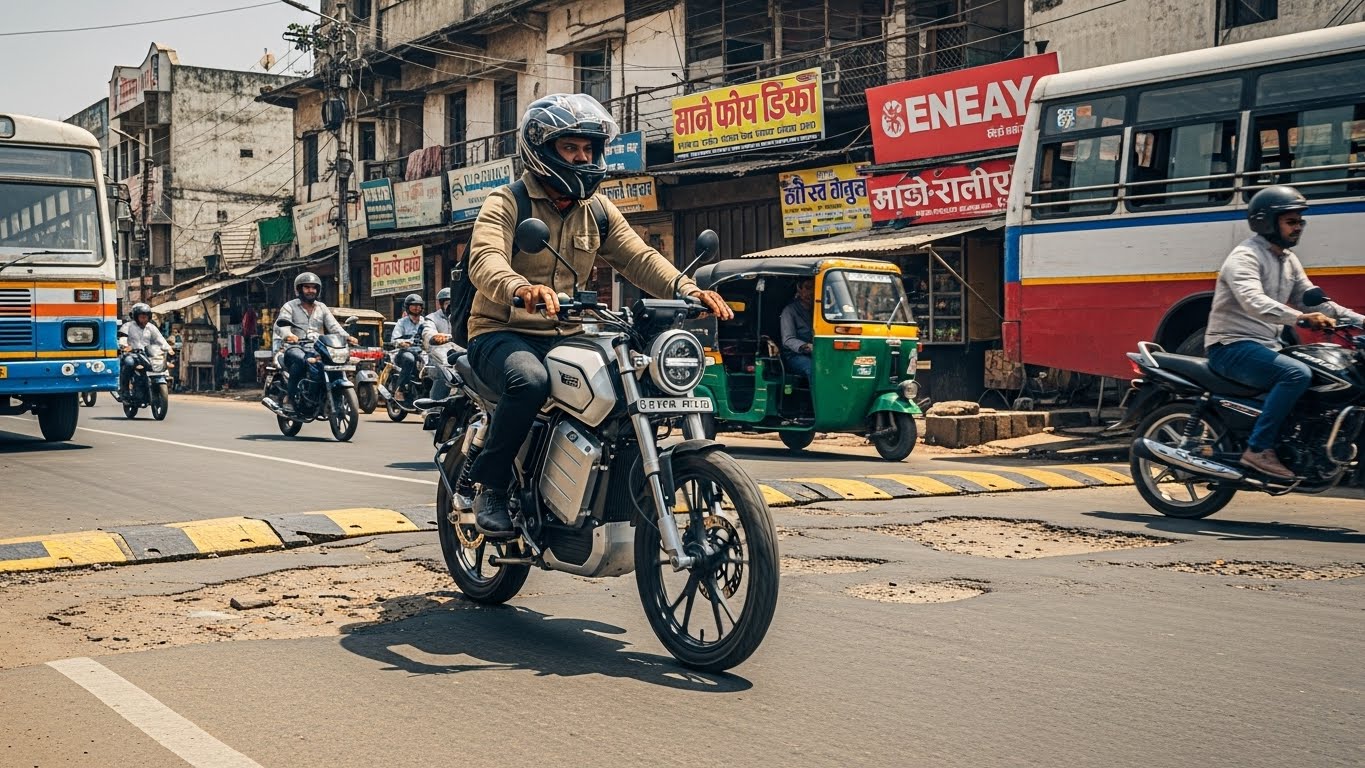
Electric Bike Performance on Indian Roads: What Indian Riders Must Know
The electric vehicle revolution is no longer a future concept in India. With rising fuel prices, increasing pollution, and strong government support, electric bikes are quickly becoming a practical alternative to petrol motorcycles. However, one important question still dominates every buyer’s mind: How well do electric bikes actually perform on Indian roads?
Indian roads present a unique combination of challenges – broken surfaces, uneven speed breakers, heavy traffic, extreme weather, and long daily commuting distances. This article explores the real-world performance of electric bikes in these conditions and explains whether they are truly reliable for Indian users.
Understanding Indian Road Conditions
To judge electric bike performance, it’s important to understand what they are up against:
- Potholes and uneven surfaces
- Dusty rural roads and gravel patches
- High humidity and monsoon flooding
- Stop-and-go city traffic
- Long highway stretches with inconsistent charging access
Electric bikes must be robust enough to handle all these without compromising comfort, safety, or efficiency.
Acceleration and Power Delivery in Traffic
Electric bikes outperform petrol bikes in one critical area – instant torque. Unlike conventional bikes that need gear shifts and throttle buildup, electric bikes deliver power instantly.
Performance Highlights:
- Quick pickup at traffic signals
- Smooth acceleration in congested areas
- Better overtaking ability in city roads
- No gear lag or clutch hassle
This makes electric bikes extremely suitable for Indian urban traffic, where frequent starts and stops are common.
Battery Range vs Indian Commuting Needs
One of the biggest concerns is range. On Indian roads, real-life range often differs from the claimed figures due to factors like traffic, load, road gradients, and riding style.
Average Range Performance:
- Entry-level models: 60 – 90 km
- Mid-range models: 100 – 140 km
- Premium electric bikes: 150 – 200 km
For daily Indian commuters traveling 20–50 km per day, even basic electric bikes provide sufficient range comfortably.
Suspension and Ride Comfort
Indian roads are notorious for testing suspension systems. Electric bikes designed specifically for India are now equipped with stronger suspension setups and wider tires.
Comfort Performance:
- Smooth handling on speed breakers
- Better shock absorption on potholes
- Stable ride with dual-suspension systems
- Reduced vibration due to electric motor design
The absence of engine vibration results in a quieter and more relaxed riding experience.
Performance During Monsoon Season
Water resistance is a key factor in India due to unpredictable monsoon rains. Modern electric bikes now feature IP-rated battery packs and sealed electronic components.
Monsoon Performance:
- Splash-resistant motor housing
- Properly sealed battery units
- Anti-corrosion wiring
- Stable grip with improved tires
However, riders should avoid deep water and flooding just as they would with petrol bikes.
Handling on Highways and Flyovers
Electric bikes perform well at moderate speeds, but highway performance depends on model type.
Average Top Speed:
- Budget electric bikes: 45–60 km/h
- Performance models: 85–120 km/h
For highway usage, choosing higher wattage motor bikes like 3kW and above provides better confidence and stability.
Charging Performance and Infrastructure Reality
Charging infrastructure is still developing in India, especially in smaller cities. However, home charging remains a viable option for most users.
Charging Time:
- Normal charging: 4–6 hours
- Fast charging: 1.5–3 hours
Many newer models also offer removable batteries, allowing charging inside homes or offices.
Cost Efficiency on Indian Roads
Electric bikes are significantly cheaper to operate in daily Indian conditions.
Cost Comparison:
- Electric bike running cost: ₹0.15–₹0.30 per km
- Petrol bike running cost: ₹2–₹3 per km
Maintenance expenses are minimal due to fewer moving parts, no oil changes, and no engine servicing.
Performance on Rural and Semi-Urban Roads
Electric bikes are increasingly becoming popular in small towns. Improved torque helps navigate rough village roads and slopes.
Key Benefits:
- Quiet and eco-friendly riding
- No dependency on petrol stations
- Ideal for short-distance village travel
- Durable frames in modern models
However, for extremely rugged terrains, higher ground clearance models are recommended.
Braking and Safety
Electric bikes now come with advanced braking technology similar to petrol bikes.
Common Features:
- Disc brakes
- Combined braking system (CBS)
- Regenerative braking
- Anti-skid technology
These features allow better control on slippery and uneven Indian roads.
Load Carrying and Pillion Performance
Indian riders often travel with family members or groceries, so load handling is crucial.
Electric bikes perform efficiently under moderate extra weight, but range slightly reduces when carrying heavy loads.
Tip: Choose models with higher torque motors for family usage.
Real World Performance Summary
Here’s how electric bikes score on Indian roads:
| Feature | Performance Level |
|---|---|
| Acceleration | Excellent |
| Comfort | Very Good |
| Monsoon Safety | Good |
| Highway Capability | Moderate to High |
| Cost Efficiency | Excellent |
| Maintenance | Very Low |
Common Electric Bike Performance Myths
- Electric bikes are slow – Not true for modern models.
- Batteries fail quickly – Quality batteries last 5–8 years.
- Not suitable for Indian roads – Now proven otherwise.
- Too expensive – Running cost offsets initial price.
Future of Electric Bikes in India
With better battery technology, improved government policies, and expanding charging stations, electric bikes are steadily becoming mainstream.
Upcoming advancements include:
- Solid-state batteries
- Longer range capacity
- Faster charging options
- Smart connectivity features
The performance gap between petrol and electric bikes is rapidly closing.
Is an Electric Bike Worth Buying for Indian Roads?
If your usage includes:
- Daily office commute
- City travel
- Short highway rides
- Budget-friendly transport
Then electric bikes are an excellent investment. They are practical, cost-efficient, and environmentally responsible.
Final Verdict
Electric bike performance on Indian roads has improved significantly over the last few years. They now handle potholes, traffic congestion, rain, and daily commuting with impressive efficiency. While highway performance still depends on model quality, overall usability in both urban and semi-urban environments is excellent.
For Indian riders looking to reduce fuel bills and embrace sustainable mobility, electric bikes are no longer an experiment — they are a smart upgrade.